
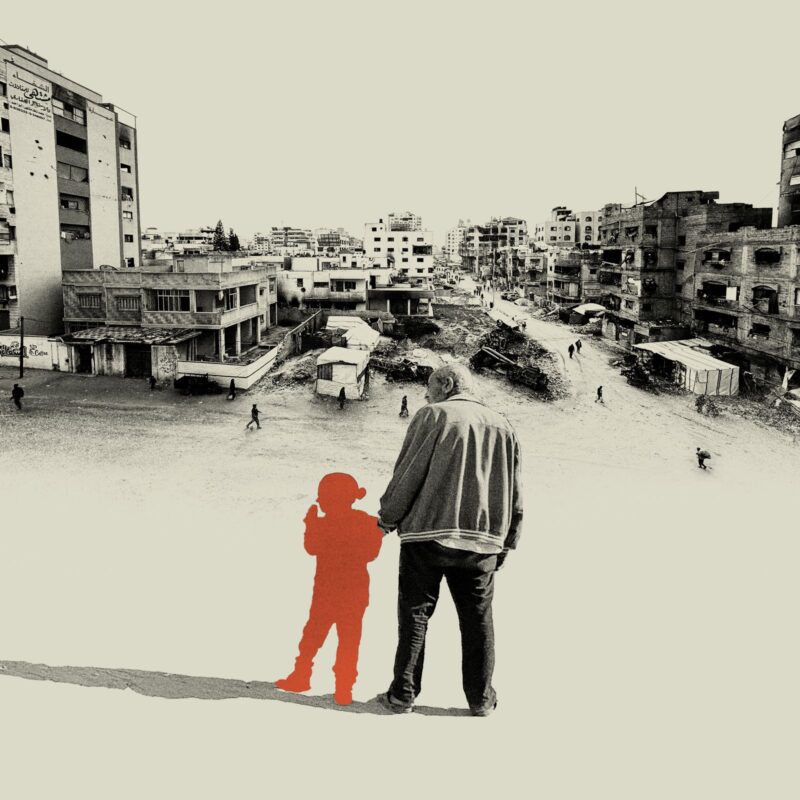
At Gaza’s Al-Shifa Hospital, the War Isn’t Over
PHOTO-ILLUSTRATION: JOAN WONG; Original photographs by Nahreen Ahmed Save this story Save this story Gauze saves lives, but Al-Shifa Hospital in Gaza City must ration what little it has, months into a supposed ceasefire.

Both gauze and its English name are widely thought to derive from Gaza and the Arabic word for blended silk, khazz .
While perhaps apocryphal, the presumed connection testifies to the bounty that the small strip of land at the eastern edge of the Mediterranean, rich in weaving traditions , has provided humanity.
As a wound dressing, gauze is an everyday miracle.
Its loose weave ironically strengthens its durability, making it able to absorb blood, discharge, pus, and drainage without becoming oversaturated and thereby returning such material to a wound site.
Gauze’s value becomes evident during its absence.
Bacteria like to sit in pools of bodily fluid.
An undressed wound beset by bacteria will become infected.
Then “the problem explodes,” says Nahreen Ahmed, a pulmonary specialist from Philadelphia who lived and worked at Al-Shifa, the largest hospital complex in the Gaza Strip , from November 25 to December 11, 2025.
The near-absence of gauze in the land of its apparent birth means that health care providers have no choice but to send patients home without it.
Those patients do not typically return to a sterile home.
More than two years after Israel responded to Hamas’ October 7, 2023, massacre with a military ferocity that the International Association of Genocide Scholars found to “ meet the legal definition of genocide ,” the patients’ homes are tents.
The winter flooded many tents with filthy water.
Infections that begin at the wound site will spread to the bone and require a preventable amputation.

A similar shortage of antibiotics compounds the problem.