
Why ICE Is Allowed to Impersonate Law Enforcement

Why ICE Is Allowed to Impersonate Law Enforcement

Photograph: Probal Rashid/Getty Images Save this story Save this story In the early hours of February 26, agents from the Department of Homeland Security (DHS) arrived at Columbia University student housing.

According to the school, the immigration officers told campus safety staff that they were police officers looking for a missing 5-year-old child.

But once in the building, agents knocked on the dorm-room door of Elmina “Ellie” Aghayeva, a student from Azerbaijan.

When her roommate opened the door, agents quickly detained Aghayeva.

At 6:30 am, Aghayeva, a social media influencer with over 100,000 followers on both TikTok and Instagram, posted an image of her legs in the backseat of a car.

She said she had been taken by Immigration and Customs Enforcement and needed help.

Columbia’s policy is to not allow federal agents onto nonpublic areas of the campus without a judicial warrant.

Most immigration arrests, however, are based on administrative warrants, which do not require a judge’s sign-off.

So how had ICE gotten onto university property?

In the hours after Aghayeva’s detention, as students and faculty rallied against DHS, it became clear: ICE had lied.

And, as it turns out, that’s (mostly) legal.

According to reporting from the Columbia Spectator , the immigration officers who arrested Aghayeva had not identified themselves as federal agents to campus security guards.

This wasn’t exactly unusual.

Experts who spoke to WIRED say that ICE has long been able to lie and even imitate other law enforcement agencies.

But with more funding , arrest quotas , and less oversight than ever before, they worry that ICE could overstep its own legal guardrails—and mislead the public even more.

Tôi là một lập trình viên IOS. Code chính là IOS nhưng thỉnnh thoảng vẫn đá sang Android hoặc web. Mặc dù không quá thông thạo nhưng tôi sẽ chia sẻ những kiến thức mà mình đã tìm hiểu, áp dụng qua.

Bài viết liên quan

Một học khu đã cố gắng giúp huấn luyện Waymos dừng xe buýt trường học.

Photograph: Jason Doiy; Getty Images Save this story Save this story One of the purported advantages of self-driving car tech is that every car can learn from one vehicle’s mistakes. Here’s how Waymo puts it on its website : “The Waymo Driver learns from the collective experiences gathered across our fleet, including previous hardware generations.” But in Austin, Waymo’s vehicles struggled for months to learn how to stop for school buses as drivers picked up and dropped off children.

Xem thêm

9 điện thoại Android tốt nhất năm 2026, đã được thử nghiệm và đánh giá

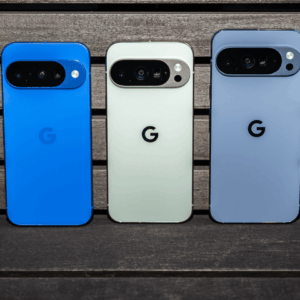
Best Android Phone Google Pixel 10a Read more $499 Amazon The Smartest Smartphones Google Pixel 10, Pixel 10 Pro, and Pixel 10 Pro XL Read more $799 $599 (25% off) Amazon (10) The Best Flagship Phones Samsung Galaxy S26, S26+, and S26 Ultra Read more $900 $853 (5% off) Amazon (S26) Best Battery Life OnePlus 15 and OnePlus 15R Read more $900 $800 (11% off) Amazon (15) The best Android phone means something different to everyone—it’s hard to find one that caters to every need. But chances are there’s a new smartphone that comes close to what you’re looking for.

Xem thêm

Nói dối có những sai sót lớn.

When George W. Maschke applied to work for the FBI in 1994, he had already held a security clearance for over 11 years.

Xem thêm
0 0 đánh giá
Article Rating
Theo dõi
Thông báo của
guest
0 Comments
Cũ nhất
Mới nhất Được bỏ phiếu nhiều nhất
Phản hồi nội tuyến
Xem tất cả bình luận